Introduction
White beech mushrooms, known commercially as White Shimeji (Flammulina velutipes, particularly the white-spored cultivar F. velutipes var. nameko or domesticated white strains), have emerged as one of the most commercially valuable edible mushrooms due to their delicate texture, umami-rich flavor, and growing demand in both Asian and international markets. Traditionally cultivated in climate-dependent facilities, their production has long been limited by seasonal variation, temperature fluctuations, and inconsistent quality. The integration of smart cultivation pods—enclosed, automated growth environments—represents a paradigm shift toward year-round, high-yield, and resource-efficient mushroom farming.
This article explores the technical principles, system design, and operational advantages of cultivating white beech mushrooms within smart pods, offering a comprehensive overview of how this convergence of biotechnology and automation is redefining specialty mushroom production.
Biology of White Beech Mushrooms
White beech mushrooms belong to the family Physalacriaceae and grow naturally on decaying wood, particularly beech trees, in temperate forests. Their optimal fruiting conditions are precise: temperatures between 12°C and 18°C, relative humidity above 85%, moderate ventilation, and indirect light or near-darkness during the fruiting phase.
The mushroom's lifecycle includes four stages:
1. Mycelial growth—colonization of a nutrient substrate (typically hardwood sawdust, wheat bran, and water) at 22–25°C in the dark.
2. Scarification (scratching)—a mechanical stimulus that induces primordia formation.
3. Primordia induction—development of tiny fruiting bodies under reduced temperature and increased humidity.
4. Fruiting and harvest—rapid elongation of the stipe and cap expansion over 10–15 days.
Each stage demands distinct environmental parameters. White Shimeji is particularly sensitive: temperatures below 10°C cause stunted stipes, while temperatures above 20°C result in elongated, spindly mushrooms with open caps and reduced shelf life. Even slight humidity drops below 80% cause cap curling and stipe desiccation. This sensitivity makes conventional open-bed cultivation risky and, in many regions, seasonally constrained.
The Smart Cultivation Pod Concept
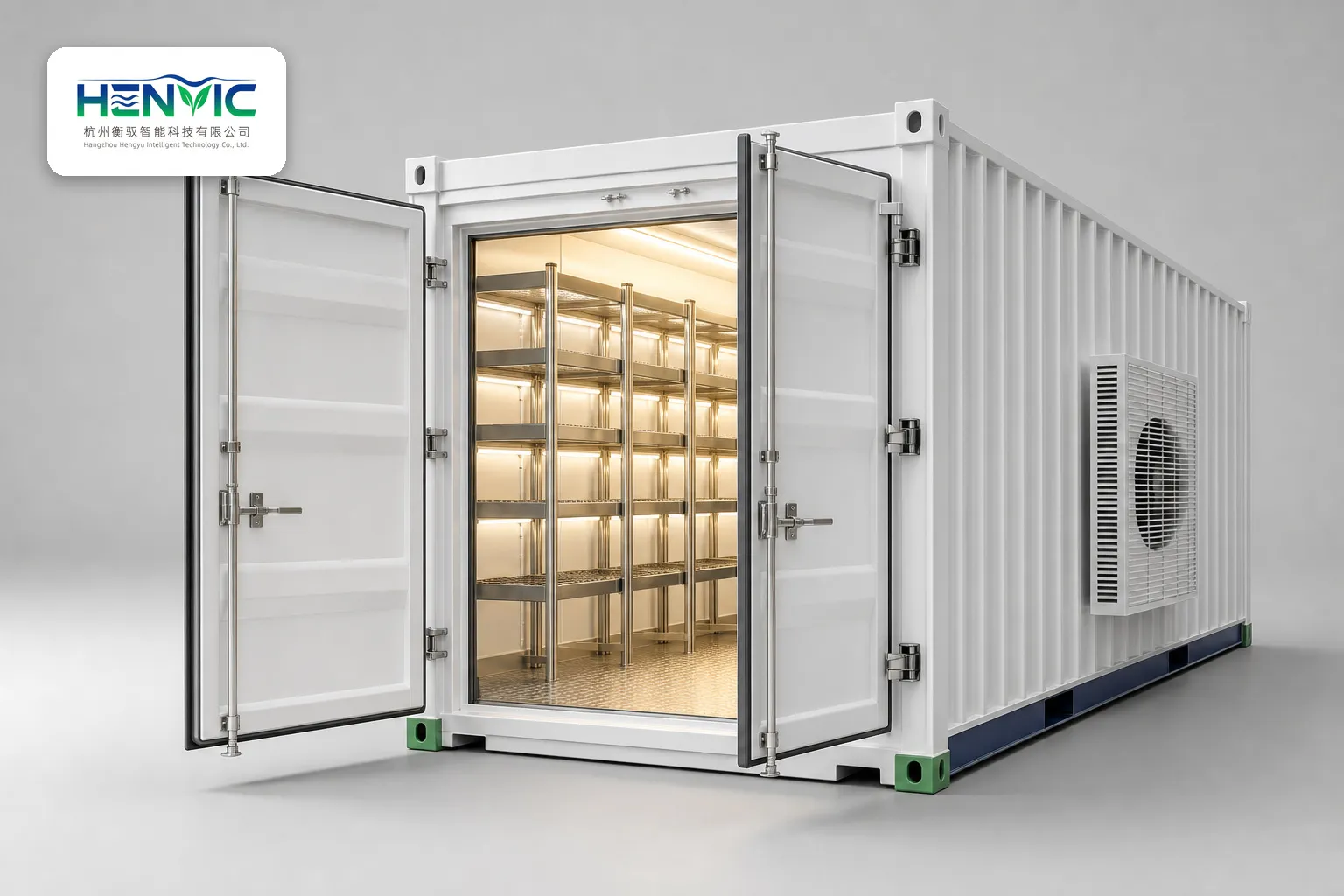
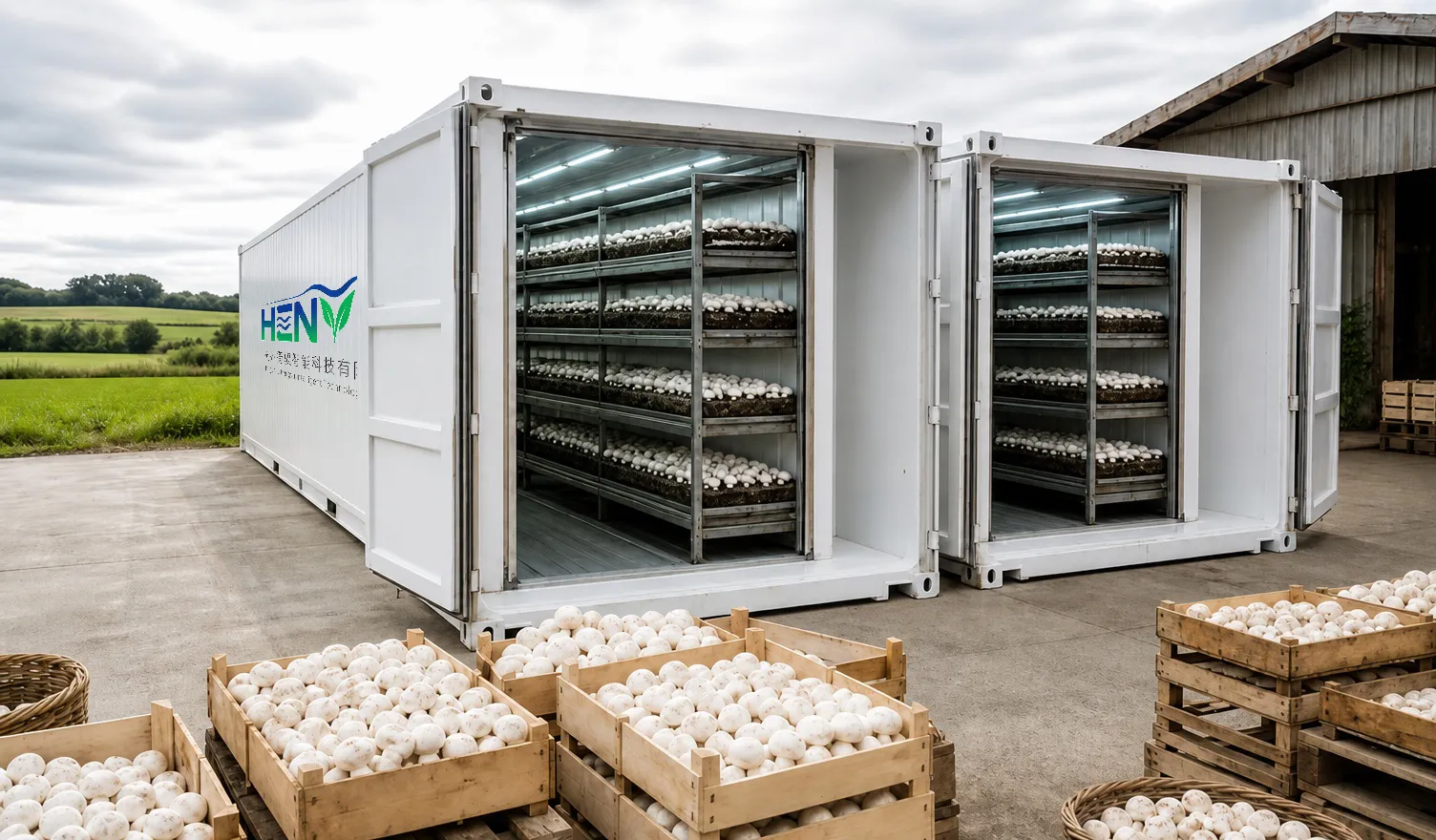
A smart cultivation pod is a sealed, environmentally controlled chamber equipped with sensors, actuators, and an intelligent control system. Its purpose is to create a stable, reproducible microclimate that precisely matches the biological requirements of a particular crop—in this case, white beech mushrooms.
Unlike greenhouses or conventional mushroom houses, which rely on passive ventilation and manual intervention, smart pods actively regulate every critical parameter through feedback loops. This eliminates guesswork, reduces contamination risk, and maximizes yield per square meter.
Core Environmental Control Systems
Temperature Regulation
Temperature is managed via integrated HVAC (Heating, Ventilation, and Air Conditioning) units with precise setpoints. Heaters and chillers are modulated by PID controllers or fuzzy-logic algorithms that maintain temperatures within ±0.5°C of the target. In the mycelial phase, the pod sustains 22–25°C; during fruiting, the temperature is reduced to 12–15°C.
Some advanced pods use water-cooled heat exchangers or geothermal coupling to reduce energy consumption, while maintaining the stability essential for mushroom quality.
Humidity Management
Relative humidity (RH) is critical throughout the fruiting stage. Ultrasonic humidifiers, steam injection, or fine-mist spraying systems maintain 85–95% RH. Sensors with high-precision capacitive elements monitor RH continuously, triggering humidification or dehumidification cycles as needed.
In high-density fruiting configurations, air circulation fans are essential to prevent localized dry spots, which can desiccate developing mushrooms within hours.
Carbon Dioxide (CO₂) Control
During fruiting, white beech mushrooms require elevated CO₂ levels (800–2000 ppm) to promote stipe elongation while suppressing cap opening—a desirable trait for the fresh-cut market. Smart pods regulate CO₂ through automatic ventilation dampers that exchange air with the exterior or through CO₂ scrubbers when levels exceed the setpoint.
This precise control distinguishes premium-quality Shimeji (long, slender, closed caps) from inferior product with opened caps and woody texture.
Lighting
White beech mushrooms are negatively phototropic; they grow away from light. During mycelial growth and fruiting, the pod maintains near-darkness (<50 lux). However, brief, low-intensity light pulses during the scratching stage can synchronize primordia formation. LED lighting systems with programmable spectra and photoperiods allow fine-tuning of this transition.
Airflow and Ventilation
Gentle, laminar airflow ensures uniform distribution of temperature, humidity, and CO₂. HEPA filtration prevents airborne contaminants from entering the chamber, while positive pressure maintains cleanliness.
Substrate and Inoculation Management
White Shimeji cultivation typically uses a substrate formula of hardwood sawdust (80%), wheat bran (15%), and water (5%). The smart pod can be integrated with a substrate sterilization and aseptic inoculation unit.
After sterilization (typically at 121°C for 60–90 minutes), the substrate is inoculated with grain or sawdust spawn. In smart pods, substrate bags or bottled culture containers are placed on multi-tier shelves, maximizing space utilization.
Scarification Automation
The scratching stage—a critical step that mechanically stimulates the mycelial surface to form fruiting primordia—is often a labor-intensive manual operation. Smart pods can automate scarification using rotating brushes, air jets, or vibration plates. This ensures consistent scratching density and depth, leading to uniform fruiting and reduced labor costs.
Harvesting and Post-Harvest Integration
White Shimeji is typically harvested manually or with specialized cutting tools, as the mushrooms must be picked at the optimal stage—when the cap is still tightly closed and the stipe is firm. Smart pods can incorporate automated harvesting arms with camera-guided precision, identifying mushrooms at peak maturity.
After harvest, the pod can be quickly reset for the next flush. In high-efficiency systems, a single pod can produce 4–6 flushes per year, each yielding 0.8–1.2 kg of mushrooms per square meter per flush.
Advantages of Smart Pod Cultivation
Year-Round Production
By decoupling production from ambient climate, smart pods enable consistent harvests regardless of season. This is particularly valuable in cold or humid regions where traditional cultivation is impractical.
Superior Quality and Uniformity
Controlled environments eliminate environmental stress, producing mushrooms with uniform stipe length, cap diameter, and color. Product consistency is critical for supermarket buyers and food service distributors.
Reduced Contamination and Disease
Closed environments with HEPA filtration and positive pressure significantly reduce the risk of green mold (Trichoderma), bacterial blotch, and other common mushroom diseases, reducing fungicide use.
Resource Efficiency
Water consumption can be reduced through recirculating humidity systems. Energy consumption is optimized through insulated pod construction and heat recovery systems.
Data-Driven Optimization
Smart pods continuously log environmental data, allowing growers to analyze growth patterns, optimize parameter settings, and predict yields. Over time, machine-learning models can identify subtle correlations between environmental parameters and mushroom quality, further refining the cultivation process.
Space Efficiency
Vertical racking within the pod can increase productivity per square meter by 3–5 times compared to single-layer cultivation.
Design Considerations for White Shimeji Pods
Pod Size and Scalability
• Laboratory pods (0.5–5 m²) for research and pilot testing.
• Commercial pods (10–100 m²) for small to medium farms.
• Industrial pods (200+ m²) for large-scale production facilities.
Insulation and Materials
Pod walls should use food-grade stainless steel or food-safe composite panels with high thermal insulation (R-value > 2.5 m²·K/W). This minimizes temperature fluctuation and condensation.
Control System Architecture
A typical smart pod uses an industrial PLC (Programmable Logic Controller) or embedded microcontroller running a dedicated cultivation algorithm. The controller receives data from multiple sensors (temperature, humidity, CO₂, light) and actuates heaters, humidifiers, fans, dampers, and lights.
The user interface can be local touchscreen or remote access via smartphone/PC, enabling monitoring and control from anywhere.
Redundancy and Safety
Critical systems—such as temperature control—should have backup actuators. Alarm systems and failsafe protocols ensure mushrooms are not lost due to equipment failure.
Cost and Return on Investment
The capital cost of a smart white Shimeji pod varies significantly:
• Laboratory pods:
5
,
00
15,000
• Commercial pods:
30
,
00
100,000
• Industrial pods:
20
,
00
1,000,000+
Operating costs include electricity, substrate, labor, and maintenance. However, premium-quality Shimeji sells at a significant premium over mass-produced mushrooms, allowing many farms to recover initial investment within 1–3 years.
Future Directions
AI-Driven Cultivation Models
Artificial intelligence is poised to revolutionize white Shimeji cultivation by predicting optimal environmental conditions for specific strains, detecting early signs of stress or disease through image analysis of mycelial growth, and automating the harvest decision-making process.
Integration with Blockchain and Traceability
Each pod can generate an immutable record of environmental conditions, substrate batches, and harvest data. Combined with blockchain technology, this enables farm-to-table traceability, building consumer trust and satisfying regulatory requirements.
Expansion to Other Varieties
The smart pod platform is modular. The same system can be reprogrammed to cultivate other mushroom species—such as shiitake, oyster mushrooms, or lion's mane—simply by adjusting the environmental parameter profiles. This makes the pod a versatile tool for diversified mushroom farms.
Sustainability and Circular Agriculture
Substrate waste from mushroom cultivation can be repurposed as organic fertilizer or animal feed. Smart pods can be integrated into circular agricultural systems, where spent substrate is composted and returned to crop production.
Conclusion
The smart cultivation pod represents a transformative approach to white beech mushroom farming. By providing precise, automated control over the critical environmental parameters—temperature, humidity, CO₂, lighting, and airflow—smart pods overcome the limitations of traditional cultivation, enabling year-round, high-yield, and high-quality production.
As the technology continues to mature, driven by advances in sensor technology, machine learning, and sustainable design, the smart pod is poised to become the standard for premium mushroom production, making high-quality white Shimeji accessible to consumers worldwide while supporting sustainable and economically viable farming practices.