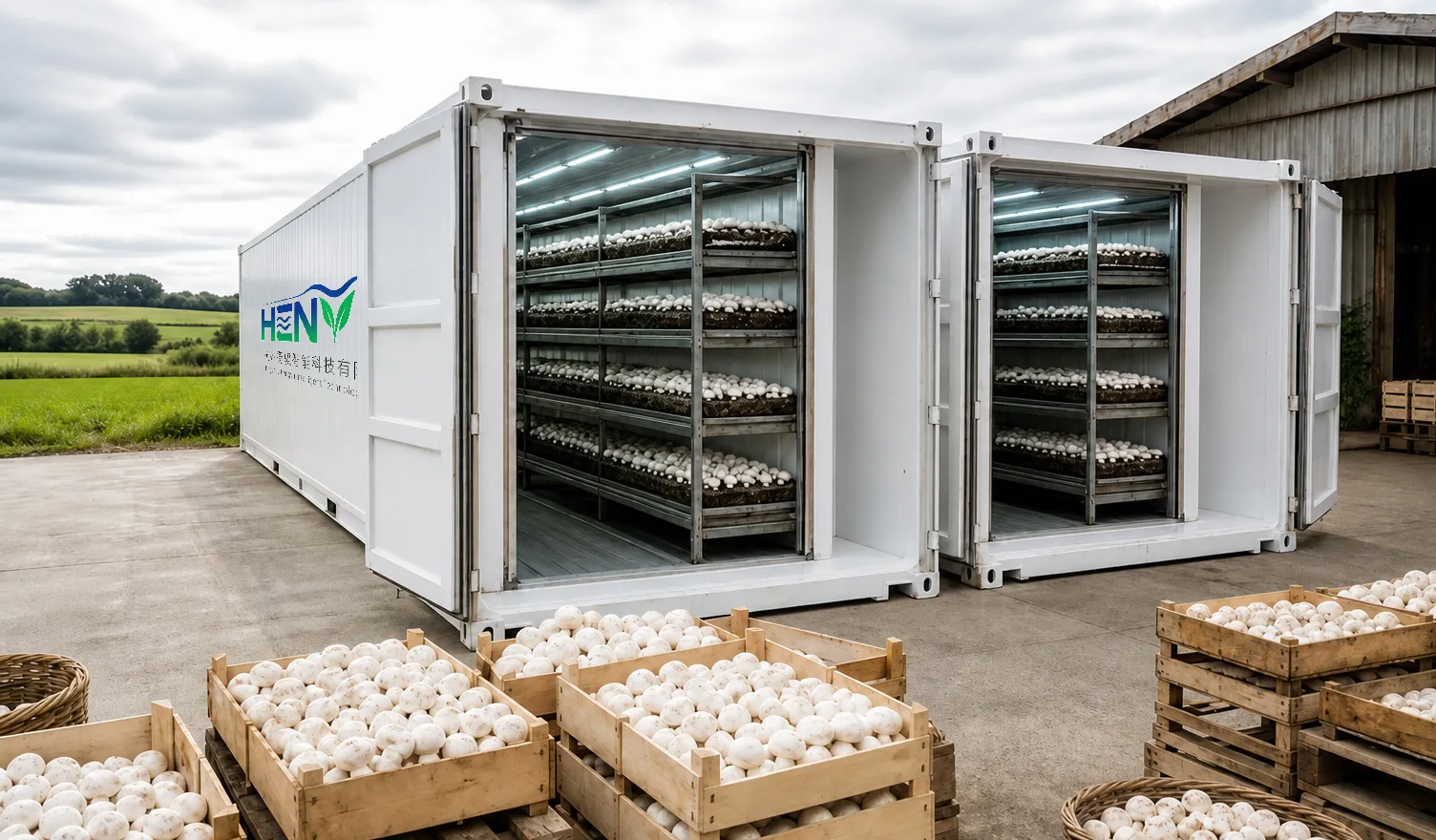
On Chongming Island in Shanghai, an ordinary rectangular shipping container was wheeled in front of a panel of judges. When its doors opened, there was no cargo inside — only tiered growing racks, lettuce pressed close to the light, and a dense web of lamps and piping. In December 2024, the Bright Food–Duoduo Vertical Farming Challenge, the fourth edition of the "Duoduo Agri-Tech Competition," concluded here. Sixteen teams entered; six reached the final. Over more than 160 days, they turned shipping containers into "new farmland."
The real significance of the contest is not who grew the largest head of lettuce, but that it dragged "container farming" out of the realm of concept words and into measurable reality.
A New Farm Inside a Box
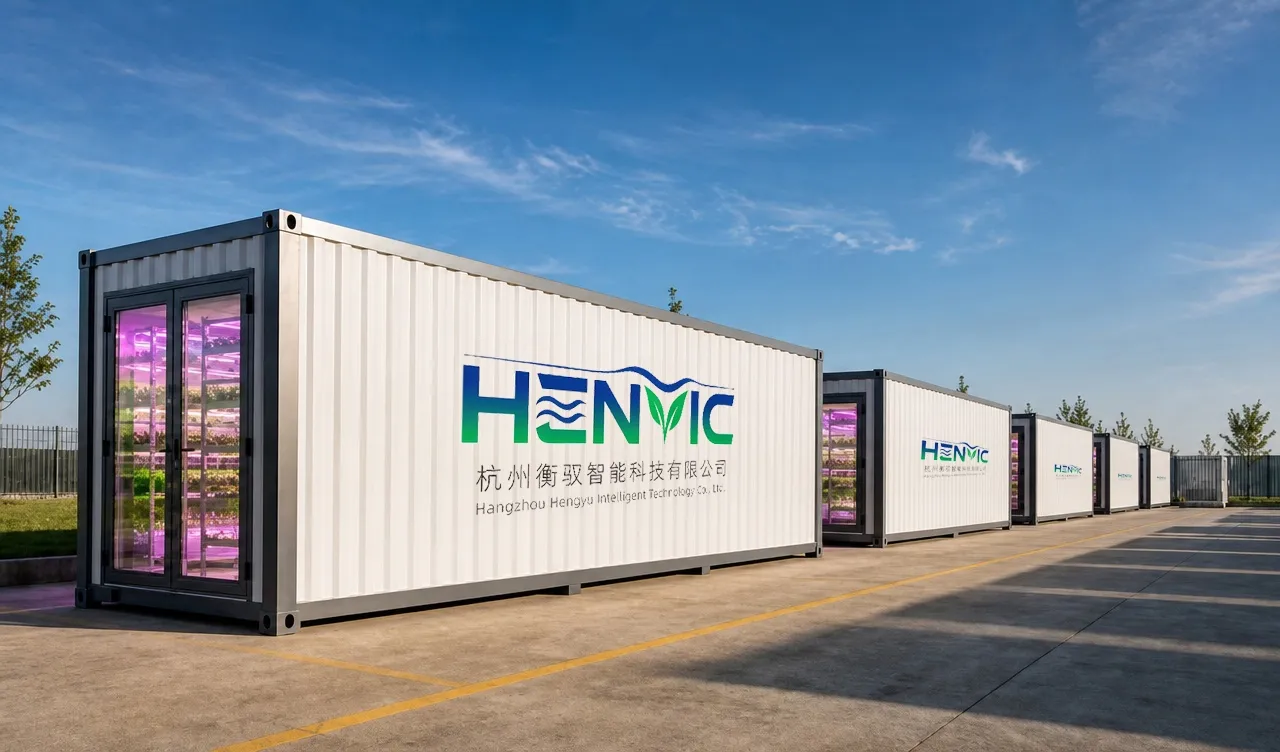
The logic of a container farm is not complicated: fold a field into a sealed space about the size of a 40-foot container. Growing racks turn flat ground into volume; nutrient solution replaces soil; LEDs replace the sun; air-conditioning and ventilation replace the seasons. Roots sit in a recirculating nutrient bath, every plant holds its own small cell, and temperature, humidity, light, and carbon dioxide are all brought under control.
The advantages are obvious: a clean, stable environment immune to weather and season, located close to consumers — in theory, you order upstairs and pick your greens up downstairs. The difficulties are equally clear: high barriers to build, higher costs to run. And of all the cost items, electricity is the heaviest.
The Numbers Start Talking
What is most worth recording about this competition is the quantified answers the teams delivered.
The champion, the "Cyber Farmer" team from China Agricultural University, achieved a yield efficiency of 0.33 kilograms per square meter per day for container-grown lettuce, while pushing electricity consumption down to 12.25 kilowatt-hours per kilogram of lettuce — judged by the panel to be at industry-leading levels. Team leader Yang Hao said their core focus was energy consumption; in this round they applied multi-source efficiency technologies such as cold-source integration and condensate recovery. Compared with the previous competition, the team more than doubled cultivation area and increased output nearly sixfold, while the share of energy consumed by air conditioning fell by nearly 70 percentage points.
The Shanghai Academy of Agricultural Sciences team pushed space utilization to a different extreme. Team leader Miao Chen explained that they developed a hanging, movable cultivation rack to improve the container's spatial efficiency, and used extensive light trials to identify a low-energy light recipe suited to lettuce. After roughly 50 days, the team harvested 1,680 heads of lettuce weighing 299.55 kilograms in about 42 cubic meters of space, with more than 90 percent reaching Grade A commercial standard — the highest yield in the field.
Industry teams performed no less strongly. The "Leaf Heroes" team from Shandong used an environmental linear control system paired with generous ventilation to give crops a sense of sunset and breeze inside a sealed box, harvesting heads averaging over 300 grams and producing a 460-gram "king of lettuce." The "Green Leaf Vanguard" team, the only finalist to eliminate the operator cabin, set the competition's ceiling for space utilization: on the same footprint, its cultivation area was 2.8 times that of open-field planting.
The Barrier Was Never "Can It Grow"
The judgment from He Dongxian, a professor at China Agricultural University and a competition judge, was blunt: on yield and energy consumption, several teams have reached internationally leading levels and possess the capability for industrialization; if the technology remains stable, it can reach profitability at scale and offer a viable return on investment.
The weight of that statement lies in shifting the question from technical feasibility to commercial feasibility. The bottleneck for container farms is no longer "can it grow," but whether electricity consumption per unit can be driven lower, whether equipment and control systems can be standardized and replicated, and whether the produce can be priced within reach of ordinary consumers.
Academician Zhao Chunjiang, who heads the National Engineering Research Center for Information Technology in Agriculture, noted that the competition not only demonstrated the integration of industry, academia, research and application, but also provided valuable experience for the future industrialization of plant factories. Sun Qixin, president of China Agricultural University and also an academician, framed such youth-innovation competitions within the broader goal of advancing agricultural and rural modernization through new business models.
From the Container Door to the Basket
The results of the experiment are already spilling outward. The Leaf Heroes team has deployed plant-factory models in Japan, South Korea, Aruba, and Thailand using new cultivation techniques such as vertical farming. The Moquan team's approach has drawn commercial interest: it is trialing chives with a local Shanghai restaurant, working with Middle Eastern partners on salad greens such as basil and arugula, and testing strawberries — a non-tropical fruit — in Thailand. During the finals, potential partners came to watch and seek container plant-factory partnerships.
Perhaps the most accurate summary of where the sector stands came from Moquan team leader Qin Chuhan: vertical farming has been in China for about two decades, technology keeps advancing and efficiency keeps rising, and industrialization still faces considerable challenges — yet everyone agrees it is a promising and correct direction.
From the container whose doors were opened on Chongming Island to a plate of salad on a city table, what lies between them is not imagination but a kilowatt-hour, a seedling, and a replicable system. The real answer to this city's vertical farming experiment will not be written at the competition — it will be written by whether vegetables can keep arriving in the basket, reliably and at a reasonable price.